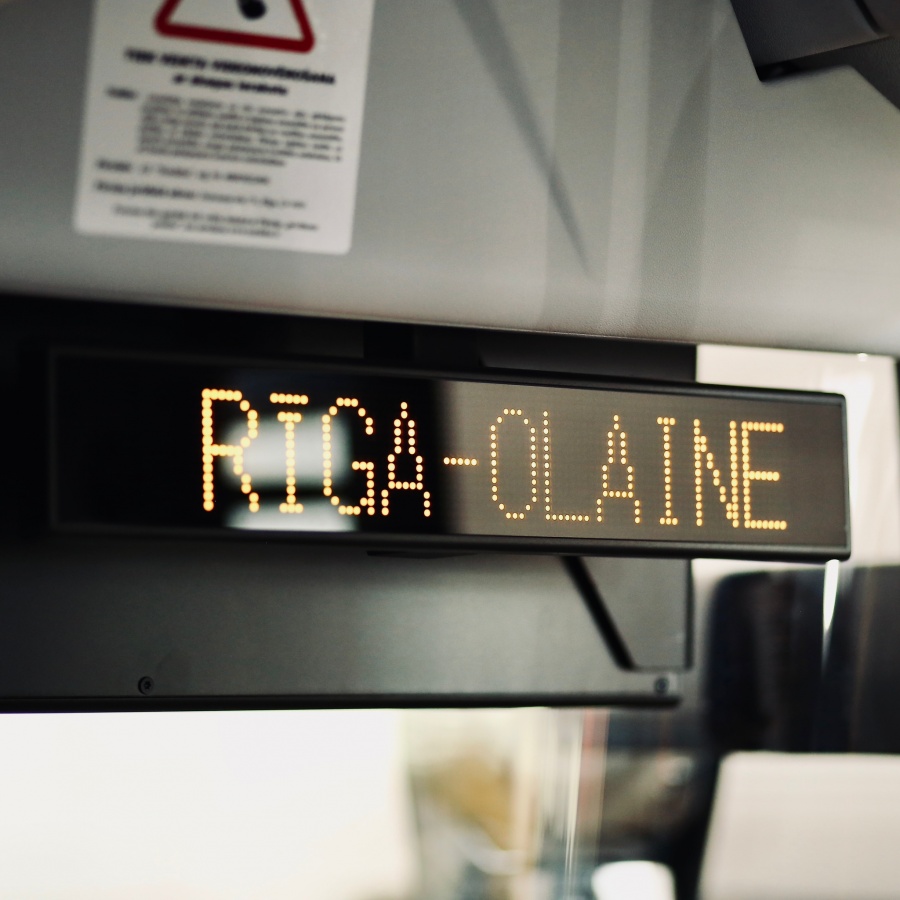
On-Board next stop displays
Technical Specifications
Display Technology: SMD-LED with options for amber or white LEDs.
Viewing Angle: 120° for optimal readability.
Resolution: Configurable up to 16 lines in height and 144 columns in width.
Brightness: Maximum of 2000 cd/m², ensuring visibility in various lighting conditions.
Operating Voltage: 12 VDC or 24 VDC (operational range: 9–36 VDC).
Operating Temperature: -40°C to +70°C, suitable for diverse climates.
Lifetime: Approximately 100,000 hours, depending on usage conditions.
Interfaces: Direct RS485 or IBIS; optional Ethernet connectivity.
Software: Compatible with MobiInfoEdit (MIE) for content creation and updates.
Data Updates: Manual via USB or automatic through IP/Ethernet interfaces.
Compliance: Meets EMC Directive 2006/28/EC and ECE-R118 flammability standards.
Key Features
Adaptive Brightness: Automatically adjusts to ambient light conditions for consistent visibility.
Slim Design: With a depth of only 23mm, it allows for flexible installation, including back-to-back configurations.
Maintenance-Free: Robust construction with protective glass cover ensures durability and reduces upkeep.
Customizable Messaging: Supports permanent or alternating text displays, such as "Stop Requested" or "Next Stop."
Key Technical Features:
Display Technology:
LED, LCD, TFT, or E-Paper options for clear, high-contrast visibility.
Available in monochrome or full-color variants, depending on the application.
Real-Time Information:
Integration with GPS and vehicle tracking systems for accurate next-stop announcements.
Supports automatic updates based on vehicle position and speed.
Communication Interfaces:
CAN, IBIS, RS485, Ethernet, Wi-Fi, or Bluetooth for flexible integration.
Compatible with popular public transport protocols like VDV, SIRI, and GTFS.
Durability and Design:
IP65 or higher-rated enclosures for water and dust resistance.
Shock and vibration-resistant construction for long-term reliability.
Power Management:
Low power consumption designs for efficient energy use.
Battery backup options for uninterrupted operation.
Passenger Accessibility:
Multilingual message support.
Text-to-speech integration for visually impaired passengers.
High-contrast displays and adjustable text sizes for better readability.
Customizable Content:
Flexible templates for route numbers, destination names, advertisements, and service messages.
Scrolling text, animated logos, and real-time service alerts.
Centralized Management:
Remote control through cloud-based platforms for fleet-wide updates.
Advanced diagnostics and monitoring features to reduce maintenance costs.
Installation Options:
Ceiling or Wall Mounting: Typically installed above doors or along the vehicle's side walls for maximum visibility.
Flush or Surface Mounting: Options for seamless integration into vehicle interiors.
Integrated Audio Systems: Can be paired with public address systems for synchronized audio-visual announcements.
Common Applications:
City Buses and Trams: Next stop and route announcements, passenger information, and advertising.
Subways and Trains: Station information, emergency messages, and service updates.
Long-Distance Coaches: Passenger entertainment and journey progress displays.